How to Start a Profitable Cornhole Rental Business: Step‑by‑Step Guide to Launch, Market, and Scale
Introduction
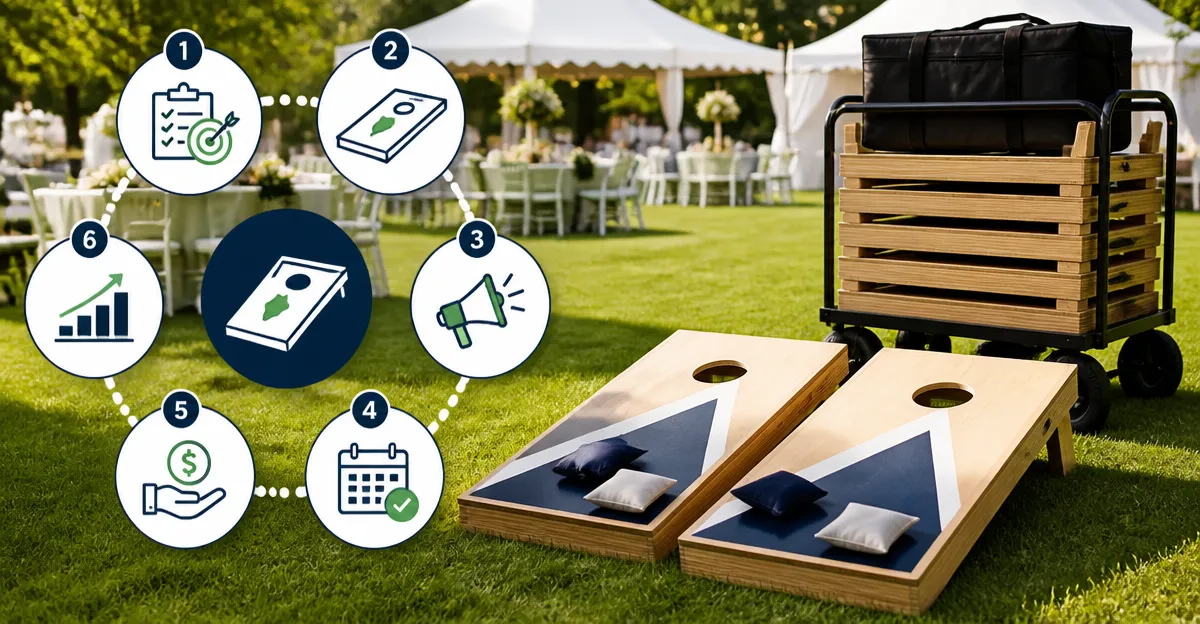
This guide will teach the reader how to create a sustainable corn‑hole rental operation from initial concept to scalable enterprise. One will understand the market potential of portable lawn games, learn how to select durable equipment, and discover proven marketing techniques that attract event planners, tailgate hosts, and community organizers. By following the actionable steps, one can generate revenue while providing a memorable entertainment experience.
The corn‑hole market has expanded rapidly because the game is simple, family friendly, and adaptable to indoor or outdoor venues. A well‑executed rental business can serve weddings, corporate picnics, festivals, and sports tailgates, producing recurring income streams. The information presented here is practical, data‑driven, and does not require prior experience in event equipment rental.
What You'll Need
- High‑quality corn‑hole boards (recommended products listed below)
- Transport solutions such as sturdy cases or utility carts
- Branding materials including logos, business cards, and signage
- Insurance coverage for liability and equipment loss
- Online booking platform or simple spreadsheet for reservations
Step‑by‑Step Instructions
Step 1: Research the Local Market
Begin by analysing the demand for portable games in the target area. Identify venues that regularly host outdoor gatherings, such as parks, breweries, and sports arenas. Contact event coordinators to gauge interest and inquire about existing rental options. Compile a list of potential clients and estimate the frequency of bookings per month. This data will inform the size of the initial inventory and pricing strategy.
Step 2: Choose the Right Equipment
The success of a rental business depends on reliable, easy‑to‑transport boards that can withstand frequent use. It is advisable to start with a mix of premium and budget‑friendly sets to cater to different client budgets.
- GoSports Wooden Cornhole Set – This regulation‑size (4 ft x 2 ft) set features solid pine frames, mitered corner joints, and a light brown stained finish. The boards weigh 38 lbs each, making them portable yet sturdy. Price is $116.99 and the rating is 4.6 out of 5 from 3,817 reviews. The included carrying case simplifies transport to multiple venues.
- GoSports Portable Cornhole Set – Ideal for clients who require a lightweight solution. Each board weighs 16 lbs and folds flat into a carrying case. The set includes eight all‑weather bean bags and costs $99.99 with a 4.2 rating from 30,124 reviews. The rustic barn‑wood graphics add visual appeal for themed events.
- GoSports Premium Wooden Cornhole Set – For high‑end rentals, this set offers premium handcrafted pine frames, a varnished surface suitable for custom paint, and eight all‑weather bean bags. It retails for $139.99 and holds a 4.7 rating from 9,007 reviews. The robust construction reduces maintenance costs over time.
- CornholeAce Pro Cornhole Boards – The most professional option, featuring 3/4" Baltic birch plywood, triple‑wide legs, and integrated side handles. Priced at $299.99 with a 4.7 rating from 614 reviews, these boards are tournament‑grade and attract serious competitive events.
- Sportdo Wooden Cornhole Set – This set combines solid wood construction with a printed pattern and Velcro storage system. It costs $123.49, carries a 4.5 rating from 106 reviews, and includes hemp rope handles for easy carrying.
When selecting a product, consider the following criteria: durability, weight, ease of setup, aesthetic appeal, and included accessories such as cases or bag storage. Premium boards command higher rental fees, while lighter sets enable rapid turnover for short‑duration events.
Step 3: Acquire Insurance and Legal Permissions
Obtain general liability insurance that covers property damage and personal injury. Many municipalities require a business license for equipment rentals; verify local regulations and register the business name. Draft a rental agreement that outlines payment terms, damage deposits, and responsibilities for set‑up and takedown. Having clear contracts protects both the owner and the client.
Step 4: Develop a Pricing Model
Calculate the cost per rental by factoring in equipment depreciation, transportation fuel, insurance, and labor. A common approach is to charge a base fee for a half‑day (four hours) plus an hourly surcharge for extended use. Example pricing tiers:
- Standard set (e.g., GoSports Portable Cornhole Set): $75 per half‑day, $15 per additional hour.
- Premium set (e.g., GoSports Premium Wooden Cornhole Set): $120 per half‑day, $20 per additional hour.
- Tournament‑grade set (e.g., CornholeAce Pro Cornhole Boards): $200 per half‑day, $30 per additional hour.
Offer package discounts for multiple sets or recurring weekly bookings. Include optional add‑ons such as branded tote bags or custom‑painted boards for corporate branding.
Step 5: Build an Online Presence
Create a simple website that showcases the equipment, pricing, and booking calendar. Use high‑resolution images of each board (the product images provided) and embed the friendly product names with links to the Amazon pages for reference. Implement a contact form and integrate a payment gateway for secure deposits.
Optimize the site for local search terms such as "cornhole rental [city]" and "portable lawn games for events". Register the business on Google My Business, Yelp, and event‑planning directories to increase visibility.
Step 6: Market to Target Audiences
Utilize a multi‑channel approach:
- Social Media Advertising: Run Facebook and Instagram ads targeting event planners, wedding venues, and sports fans within a 50‑mile radius.
- Partnerships: Offer a commission to local breweries, parks, and recreation centers that refer clients.
- Email Campaigns: Collect leads from website inquiries and send quarterly newsletters highlighting seasonal promotions and new board designs.
- Demonstration Events: Attend community festivals and set up a free‑play booth using the GoSports Wooden Cornhole Set to generate buzz and collect contact information.
Track the source of each booking to allocate marketing budget efficiently.
Step 7: Scale the Business
Once a steady stream of bookings is established, consider expanding inventory with additional board styles to serve niche markets such as corporate branding or collegiate tailgates. Hire part‑time staff for set‑up and takedown during peak seasons. Invest in a utility trailer to transport multiple sets in a single trip, reducing fuel costs.
Analyze key performance indicators monthly: revenue per set, utilization rate, and customer acquisition cost. Use this data to refine pricing, adjust inventory mix, and identify high‑margin segments. Over time, the business can evolve into a full‑service outdoor entertainment provider, adding games like giant Jenga or ladder toss.
Tips & Pro Tips
- Inspect each board before and after every rental; replace damaged bean bags promptly to maintain a professional image.
- Offer optional branding services such as custom paint or vinyl decals on the GoSports Premium Wooden Cornhole Set; this creates an additional revenue stream.
- Store boards in a climate‑controlled garage to prevent warping; the solid wood construction of the Sportdo Wooden Cornhole Set includes cross‑braces that resist bending, but extreme humidity can still affect plywood.
- Maintain a digital inventory spreadsheet that logs serial numbers, condition notes, and location of each set to avoid loss.
- When transporting multiple sets, secure them with ratchet straps inside the trailer to prevent movement during transit.
Troubleshooting
| Problem | Possible Cause | Solution |
|---|---|---|
| Boards wobble during play | Uneven leg extension or uneven ground | Adjust leg bolts on the GoSports Wooden Cornhole Set; use a level to ensure both boards are parallel. |
| Bean bags lose shape | Low‑quality filler or exposure to moisture | Replace with the all‑weather bags included with the GoSports Premium Wooden Cornhole Set, which use recycled plastic pellets. |
| Carrying case cracks | Heavy handling or sharp edges | Consider upgrading to the reinforced case that comes with the CornholeAce Pro Cornhole Boards, which features molded side handles. |
Conclusion
By following the steps outlined above, one can launch a corn‑hole rental business that generates consistent profit while delivering enjoyable experiences at a wide range of events. Selecting durable equipment, establishing clear pricing, and executing targeted marketing are the pillars of success. As the operation grows, reinvest earnings into additional boards, branding services, and staffing to scale efficiently.
Start today, test the market, and watch the business expand from a single set to a full‑service outdoor entertainment enterprise.
Products Mentioned in This Guide
Frequently Asked Questions
What initial equipment is essential for a corn‑hole rental business?
You need high‑quality, weather‑resistant boards, a set of bean bags, and sturdy transport cases or utility carts for easy delivery.
How much capital should I budget to launch a small corn‑hole rental operation?
A basic startup can be launched with $2,000‑$5,000 covering boards, branding, transport gear, and initial marketing.
Which markets generate the most demand for corn‑hole rentals?
Weddings, corporate picnics, festivals, sports tailgates, and community events are the top revenue sources.
What are effective low‑cost marketing strategies for this business?
Leverage social media ads, partner with event planners, attend local fairs with demo boards, and list services on rental marketplaces.
How can I scale my corn‑hole rental business beyond the first year?
Add more board sets, offer themed or branded boards, implement an online booking system, and pursue repeat contracts with venues and corporate clients.